


Katie Oliver, Associate Executive Director
Across Alaska, school boards are navigating a complex and demanding time. From funding pressures to critical maintenance needs, from teacher recruitment to student use of technology, the work at the board table has never been more important.
In the midst of that work, I often find myself returning to a resource that has been with us for decades but may not always be top of mind: AASB’s Board Standards. First developed in 1998 through a broad-based effort, the Board Standards were designed to answer a simple but powerful question: What does effective school board governance look like in Alaska?
The Board Standards can be found in your district policy manual (Board Bylaw 9020 & Exhibit 9020) and are organized into five areas: Vision, Structure, Accountability, Advocacy, and Conduct & Ethics. The framework is familiar, practical, and still highly relevant. But like many long-standing tools, it can quietly fade into the background. Consider this an invitation to dust them off. One of the most useful ways to bring the standards to life is to treat them as prompts for board reflection and action.
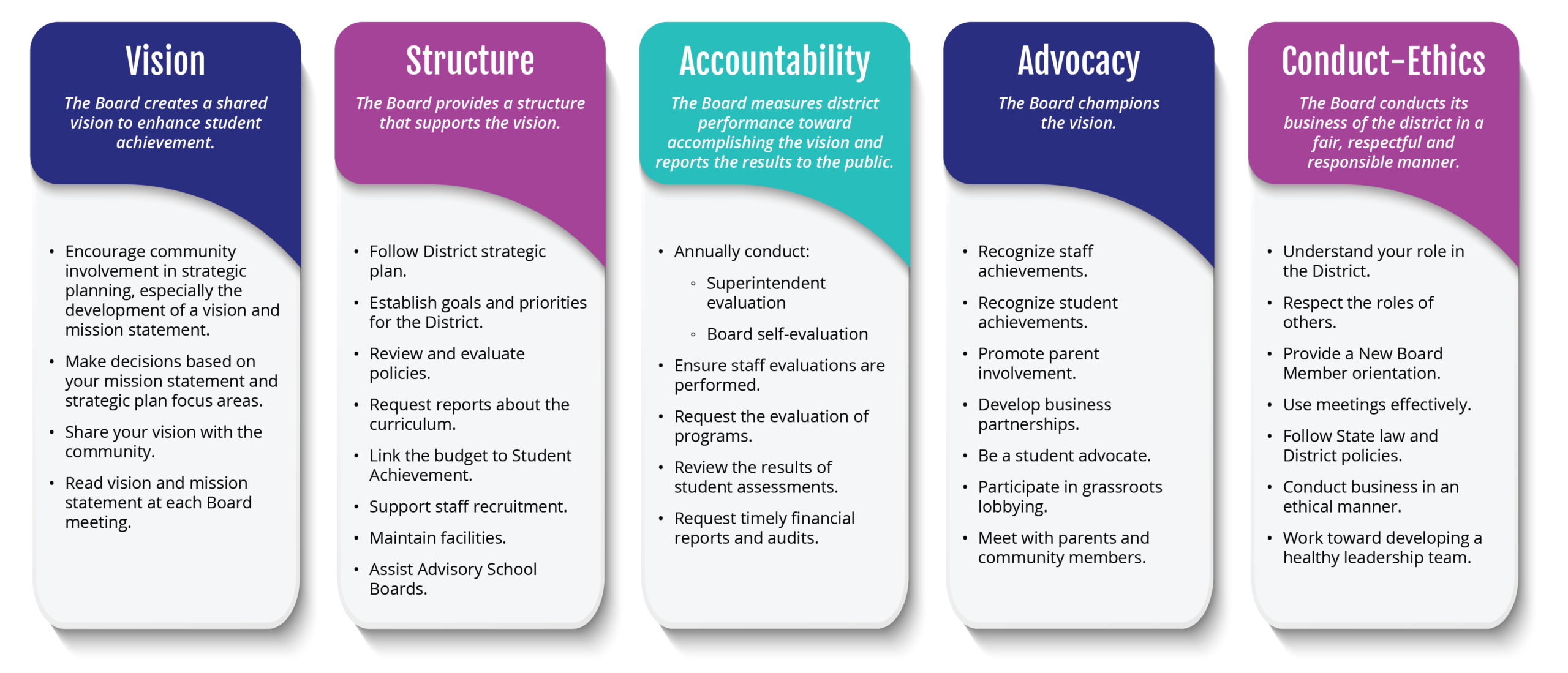
For example, under Vision, the standards remind us to keep students at the center of every decision, often captured in the simple question: Is it good for kids? A board might put this into practice by making that question a standing part of deliberation. Before a vote, pause and ask it explicitly. Ask how a decision advances the district’s vision. Over time, this small habit can shift the tone of conversation and help anchor decisions in purpose.
Under Structure, the standards focus on aligning systems, policies, and resources with the district’s goals. In practice, this might mean taking a closer look at board agendas. Do agenda items clearly connect to strategic priorities? Are you spending time on what matters most, or simply what is most immediate? Some boards have found it helpful to tag agenda items to strategic goals or build regular planning check-ins into the calendar throughout the year.
Accountability is about understanding progress and sharing it openly. Rather than simply receiving reports, boards can ask: What story does this data tell? What questions does it raise? How does this connect to our vision? Just as important, how are we sharing this information with our community in a way that is understandable and meaningful? A quick side note: we will have a full afternoon session on using data to support board decision-making at our upcoming Spring Boardsmanship Academy. Join us for ideas and inspiration from the field.
Under Advocacy, the standards encourage boards to champion students and build strong connections with families and community partners. This can be as simple as being more intentional about recognition. Celebrating student success, acknowledging staff excellence, and showing up at school and community events all reinforce the board’s role as visible advocates for education. It can also mean staying proactive by identifying emerging issues, tracking legislation, and speaking up on behalf of students.
Finally, Conduct & Ethics reminds us that how boards work together matters. In practice, this often shows up in board meeting culture. Do board members feel comfortable expressing different viewpoints? Once a decision is made, does the board move forward together? Are you investing time in your own development as a governance team? Some boards use the standards to guide annual self-assessments or to establish shared norms for how they will work together. A hat tip here to the Sitka School Board, which developed and customized a board self-assessment tool last fall based on the Board Standards.
The standards are most effective when they are woven into the regular rhythm of board work.
A few simple entry points:
- Start a meeting or retreat with a brief reflection on one standard area.
- Use the standards to frame your board’s self-assessment or goal-setting.
- Revisit one section each quarter and identify one small practice to strengthen.
- Incorporate the language of the standards into board norms or operating procedures.
None of these steps require a major shift. But over time, they can build alignment, strengthen governance practices, and reinforce clarity of purpose.
The Board Standards have shaped AASB’s board development work for years and continue to reflect what effective governance looks like in Alaska. They are meant to be used, revisited, and applied. At a time when the work of school boards feels increasingly complex, the standards offer something valuable: a steady, practical framework to guide decisions, strengthen practice, and keep the focus where it belongs—on students.