
Emily Ferry, Family Engagement Manager
North Pole High School senior Liam Wade has a message for school board members. At AASB’s annual conference, he told attendees, “So often in Alaska’s schools we’re teaching for lower-48 jobs; we’re teaching for lower-48 opinions and opportunities.” He called on school boards to meet students where their interests are, as well as where the financial and educational opportunities are.
Liam echoed keynote speaker Jeff Ultrect’s message; we should teach for careers we’re seeing in the future, not the past. Utrecht noted that 75% of the future jobs will need some sort of training after high school.
Here in Alaska, we do have a lot of opportunities for employment and to receive additional education. Nearly nine out of ten students who responded to the School Climate & Connectedness Survey indicated that they want more education after high school. But we struggle to connect students with those opportunities.
Consider that Alaska continues to have the lowest completion rate of the Free Application for Federal Student Aid. Also known as the FAFSA, this form is the key to unlocking millions of dollars in scholarships and grants for college and career training, like the Alaska Vocational Technical Center. The Alaska Commission on Postsecondary Education’s Higher Ed Almanac reported that Alaskan students missed out on $7 million in free federal financial aid simply by not completing the FAFSA last year.
Fortunately, promising practices like providing explicit career guidance for seniors are making a difference.
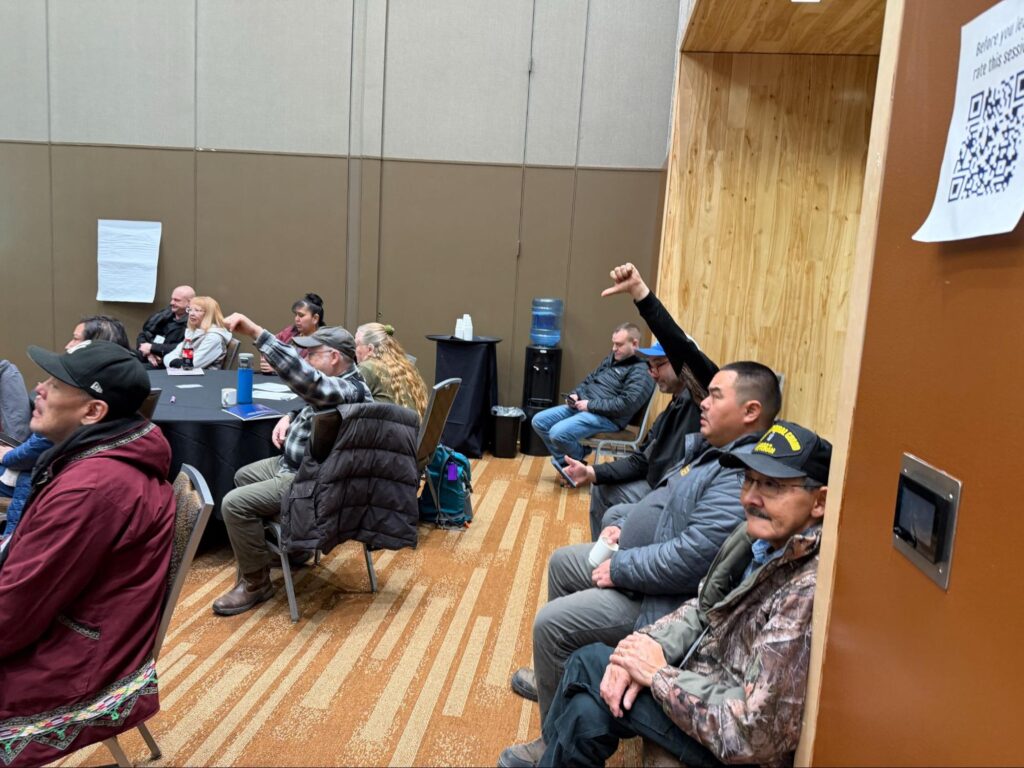
At AASB’s conference, career guide Noel Bowe shared how she is using a simple framework developed by the rootEd Alliance to work with students in the Southwest School District to make a plan for life after high school. She is meeting with each student at least twice during their senior year to coach and track their progress toward developing personal and financial plans and applying to universities, apprenticeships, employment, or the military.
The simple, but structured approach has made a difference. In districts where the program was piloted, FAFSA completion rates were 12% higher than the state average. As the program continues, participating districts will look at postsecondary persistence and completion rates as well as employment of grads.
What can your school board do to help student prepare for their future? Check out the tips on what school boards can do on AASB’s website.