Conditions for Learning Team
AASB
AASB's CFL team provides school districts and communities across Alaska with hands-on training and tools to strengthen school climate, student well-being, and family-school partnerships.


Conditions for Learning Team
AASB
AASB's CFL team provides school districts and communities across Alaska with hands-on training and tools to strengthen school climate, student well-being, and family-school partnerships.
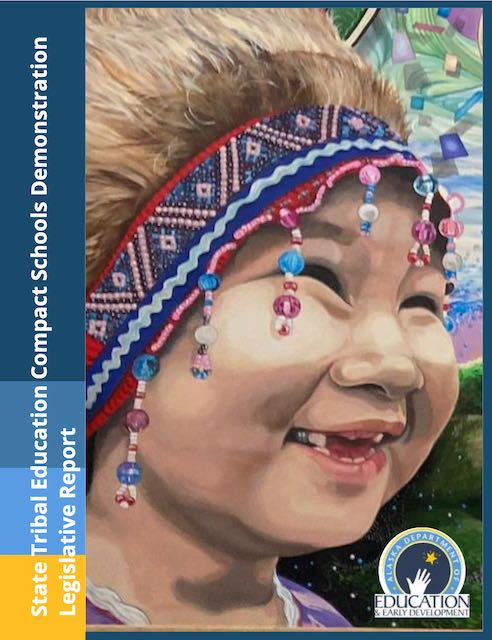
The State of Alaska has established a demonstration project to support tribes within Alaska to have more control over education in their communities, a move aimed at improving long-term educational outcomes for Alaska Native students.
The initiative, outlined in the State-Tribal Education Compact Schools Demonstration Legislative Report, proposes creating Tribally Compacted Public Schools (TCPS) through partnerships between the state and tribal organizations. The 72-page report, developed by the Department of Education and Early Development (DEED) and participating tribes, details plans to establish governance structures, funding mechanisms, and operational structures that support tribal sovereignty over education and offers tribes a chance to establish schools that upholds Alaska Native values, culture, language, and pedagogy into the education system.
TCPS will be considered public schools within Alaska. Under the compact agreements, each participating tribe will be recognized as a local educational agency (LEA) and will function as a school district under Title 14 of Alaska law. This classification allows TCPS to operate within the framework of the state’s public education system while maintaining local governance, educational sovereignty, and culture and place-based learning integration.
The demonstration project is designed to support tribal and educational sovereignty and to allow for tribes to define and reach their own educational goals for their students, families, and communities. Compact agreements between the state and selected tribal partners, authorized by Senate Bill 34 (SB 34), allows up to five demonstration tribally-run schools to develop.
The State Tribal Education Compact Demonstration Project Included:
The STEC Demonstration Project participants have compiled their recommendations and findings here.
This report was developed during a 10-month negotiation period with tribal leaders and an extended public input session. During that time, the STEC participants considered governance, funding, teachers and school personnel and evaluation.
The TCPS framework underscores that the schools will be public schools open to all students. The programs will be student-centered and prepare for future ancestors or future generations.
The report also shows how each tribe will approach their education demonstration project uniquely.
In a recent meeting between the Association of Alaska School Boards and representatives from four of the STEC partnerships, this information was provided:
Or look at the resources at the National Indian Education Association.
The report outlines key steps to develop a transformative and successful education model for Alaska Native Students and recommends:
The report also includes an example of a negotiated government-to-government agreement.
Tribal Compacting is one path to long-term educational success for Alaska Native students, combining state resources with tribal autonomy to create schools that reflect and uphold Alaska Native values and heritage. As the report notes, the TCPS initiative holds the potential to make culturally integrated education a reality, promoting academic success and community well-being across the state.
For more information on the State-Tribal Education Compact Schools, visit the Department of Education and Early Development website.
Many school districts, regardless of whether they have tribal education compact goals, acknowledge the need to enhance their consultation protocols and relationships with local tribes. Explore strategies for strengthening these vital partnerships at the upcoming AASB Spring Boardsmanship Academy.