Lisa X̱’unyéil Worl
Partnerships Coordinator
AASB

Lisa X̱’unyéil Worl
Partnerships Coordinator
AASB
School districts across Alaska are working to improve student outcomes by integrating local culture, language, and traditional ecological knowledge (TEK) into their curriculum. From Barrow to Hydaburg, schools are partnering with tribal organizations to create educational resources that support language revitalization for both students and families.
In 2018, the Association of Alaska School Boards asked six communities in Southeast Alaska about their priorities around culturally responsive education. Every community identified language revitalization as a key goal for their children and community.
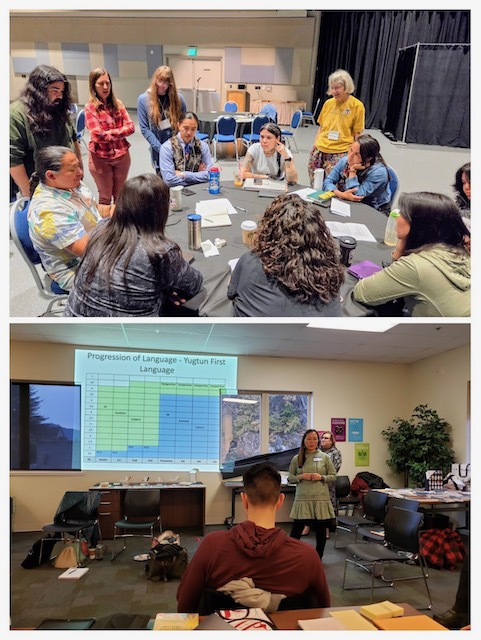
AASB’s Conditions for Learning team has supported language revitalization work across Southeast Alaska by bringing together language teachers, supporting them to share resources and best practices and connect over shared vision for language revitalization. For example, Lower Kuskokwim School District shared their Yuqtun curriculum with teachers of Lingít and Xaad Kíl languages.
Over the past seven years, this work has steadily worked its way up from classroom language teaching, to programmatic coordination, to organizational partnership.
In 2024, four tribal organizations—Sealaska, Sealaska Heritage Institute, Goldbelt Heritage, and Tlingit & Haida Central Council— signed an agreement to work together to support language revitalization in the region.
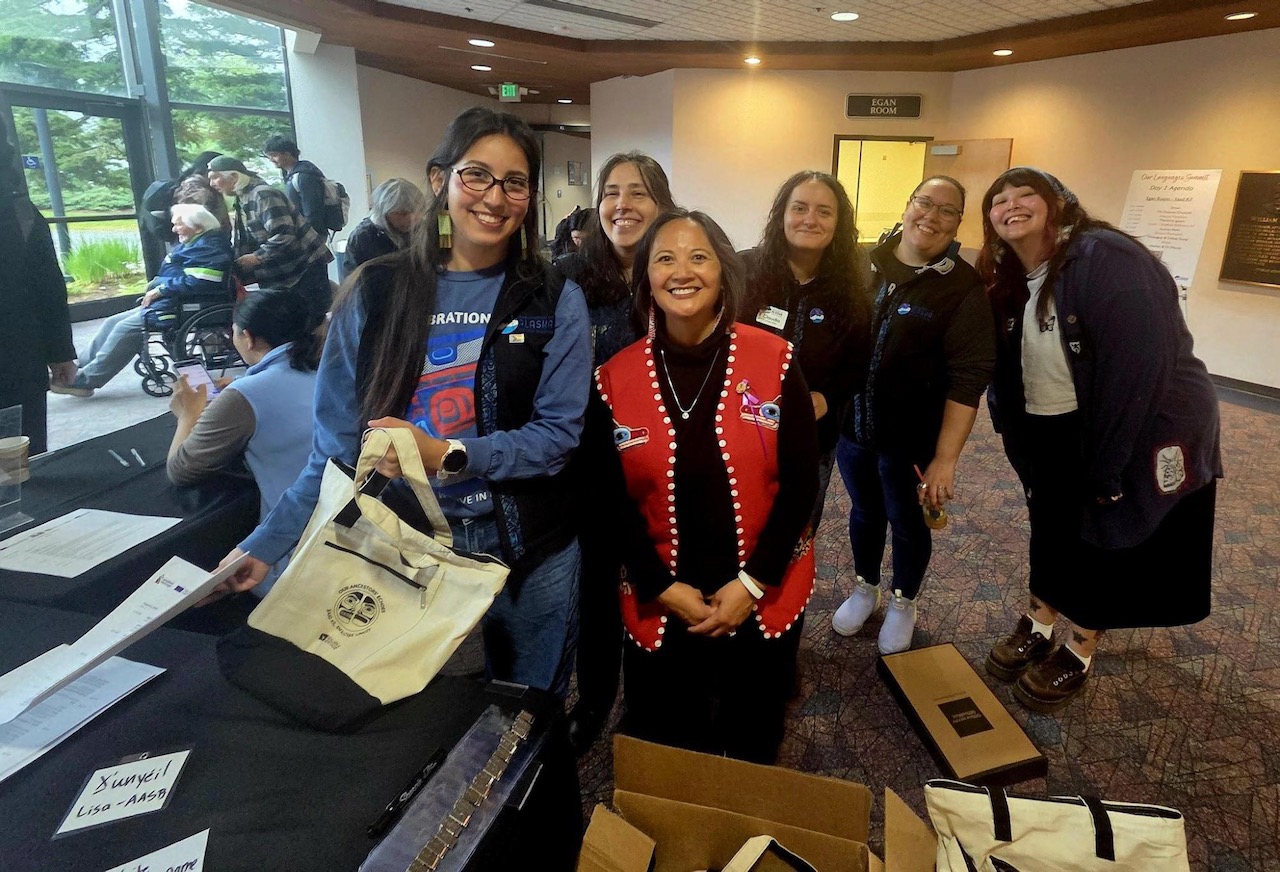
The four tribal organizations collaborated in planning and co-hosting a Language Summit in Juneau in August 2025 that had more than 200 participants show up for opening day.
The language summit was achieved through collective impact guided by the tribal entities’ Declaration which outlined ways they would work together to support and work together to develop more fluent Lingít, Xaad Kíl, and Sm’algyax speakers.
“Years ago, we held a language summit to bring together our precious elders to document and to keep our language alive, but without any definite plans for the future of our language. For this summit to build off areas we identified in our organizational declaration and teacher requests, and to see the conference room full of language educators and speakers was so awesome.”
– Dr. Rosita Kaaháni Worl, President of Sealaska Heritage Institute, reflecting on the summit
As part of the language summit planning, AASB collected feedback to note any lessons learned for any possible future language gatherings they might host together.
Summit planners and participants shared some of the following survey responses:
To support language revitalization, AASB recommends:
For more information, you can visit Association of Alaska School Board resources on Cultural Responsiveness or contact Lisa X’unyéil Worl and for community dialogues contact Lakrisha Chookán Brady.