
Why Does it Matter?
When students have a plan for life after high school – whether career or military training or two-year or four-year college programs – they are better able to contribute to their community and more likely to thrive.
Unfortunately, Alaska has among the lowest rates of postsecondary attainment in the nation and high rates of disconnected youth: one in five young adults in Alaska (ages 16-24) is not engaged in school or work, according to the Measure of America. Our communities and employers need the next generation to be ready to step into leadership roles, and our young adults need a sense of purpose and connection.
What Can Schools Do?
AASB has been taking a close look at why Alaska’s postsecondary outcomes are far lower than those of other states and how we can improve those outcomes.
- The Alaska College and Career Guidance Interviews & Findings Report takes a closer look at how career guides and advisors are making a difference for Alaska’s students.
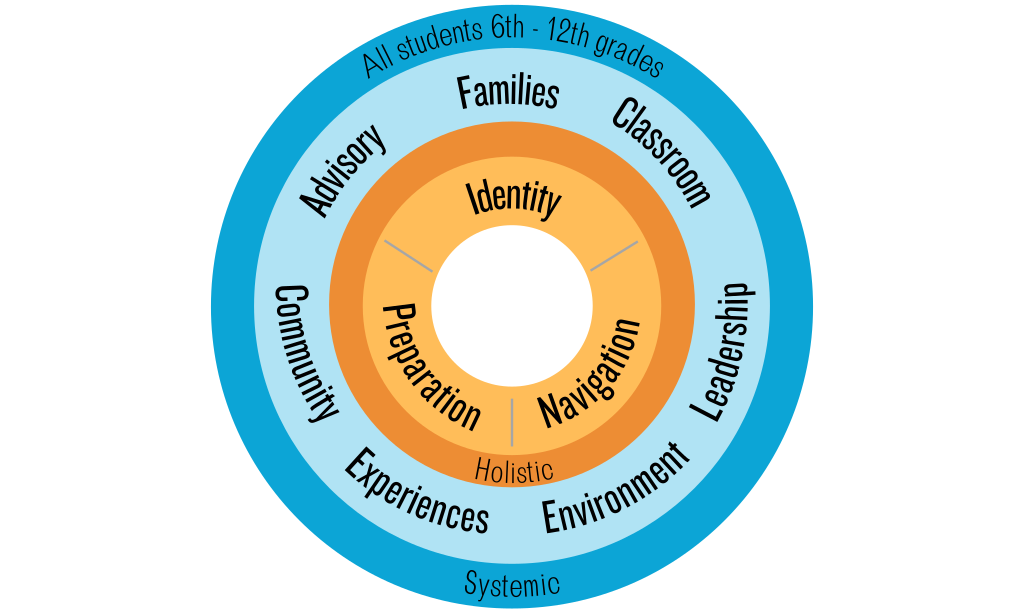
- The Bridging to the Future Framework can help school leaders inventory their school district’s postsecondary strengths and gaps.
Research finds that students thrive when school districts take a systemic and holistic approach to supporting postsecondary preparation. Schools can help students prepare for life after high school by fostering academic preparation, postsecondary and life navigation skills, and cultural and self-identity.
In the fall of 2022, AASB cohosted the Now for Next Workshop. Stakeholders from across the state made recommendations, which include:
- Embed culturally affirming social & emotional learning
- Identify key timelines & provide financial literacy support for families
- Start early (no later than middle school)
- Fund career guides (coaches & advisors) to support students in making a plan
- Foster mentorships at the community and campus levels
Did You Know?
For more about how school boards can monitor and support postsecondary success of their graduates, see the January, 2024 Commentary article, Are your students ready for life after high school?
What questions should school boards ask?
School boards can look at these questions to evaluate your postsecondary preparation strategies.
How are your graduates faring?
The Alaska Commission on Postsecondary Education can share reports from the National Student Clearinghouse with school districts for free. The Clearinghouse tracks graduates for six years after high school. Email eed.acpe-execdirector@alaska.gov to find out more.
Who is accessing financial resources?
The FAFSA Tracker shows real-time completion rates for each district and high school. The Alaska Performance Scholarship annual report lists how many students from your school district are eligible to use this merit-based scholarship. Publishing a list of APS-eligible courses offered by your district can help students qualify for the scholarship.
Are you offering equitable opportunities?
Is the percentage of students in Advanced Placement and dual enrollment courses proportionate across race and socioeconomic classes? The Alaska Department of Education & Early Development’s School Report Card to the Public also shows postsecondary enrollment rates of recent grads broken out by demographics.
Are students and families talking about plans for life after high school?
The School Climate and Connectedness Survey poses these questions to middle and high school students and families.
Are you providing culturally affirming career guidance?
The Rethinking Readiness assessment can help you evaluate how well you are providing support for Alaska Native students and others who have traditionally been underrepresented.
Do students and families know how to access planning & financial resources?
Alaskan students are now eligible for up to $28,000 from the Alaska Performance Scholarship if they:
- Take four years of a qualifying high school curriculum.
- Achieve a 2.5 GPA or higher
- Complete the FAFSA
Another change in the legislation requires schools to make students aware of the opportunity during their 9th and 10th grade years.
Don’t forget to let your students know about the many other scholarships that are also available like AASB’s June Nelson Scholarship. Each year the Ciri Foundation publishes a robust list of scholarships. Many of these can be used to help cover expenses like books or travel to and from school in addition to tuition.
Promising Practices in Alaska’s Schools….
In order to receive the Alaska Performance Scholarship, students must take four years of qualifying courses. These are are outlined in the state statute;, however, districts may offer substitute courses that are considered rigorous.
For example, Bering Strait School District recently identified qualifying APS courses in its catalog. Administrators determined that their Siberian Yup’ik class met the requirement for rigor while other Intro to Yup’ik classes did not yet meet that standard.
Some smaller schools in Bering Strait don’t currently offer enough stand-alone science courses for students to qualify for the scholarship. Instead, the district is partnering with the university to offer dual enrollment science credit options.
School boards and administrators can help teachers, counselors, students, and families plan for the scholarship by:
- Creating and sharing a list of APS-eligible courses offered by the district and its partners.
- Providing families and students with support to complete the Free Application for Federal Student Aid. The FAFSA serves as the application for the Alaska Performance Scholarship.
- Ensuring faculty and staff have the training and resources necessary to educate the school community about the Alaska Performance Scholarship
Schools are also required to let 11th graders know their progress toward APS eligibility and to let 10th and 9th graders know about the scholarship. We recommend starting with 8th grade students and their families so they can plan ahead and stay motivated to keep their GPA high.
The Alaska Commission on Postsecondary Education has more information on eligibility requirements, FAQs, FAFSA completion support, and additional info on its ACPE’s website. Templates and information to share with families are available through the Alaska Family Engagement Center. Felicia Swanson at the Department of Education & Early Development, felicia.swanson@alaska.gov can help with eligibility questions for the scholarship.
How AASB can Help
In addition to the reports and resources listed on this page, AASB can facilitate workshops with school boards, staff, and community members to assess your postsecondary outcomes and develop strategies to help more students transition to meaningful opportunities after high school.
Contact us to learn more about these workshops and other resources.
Resources & Tools
- Alaska Family Engagement Center
- Kids2Careers
- Rethinking Readiness Assessment
- Rethinking College Readiness for Alaska Native Students
- Alaska 529
- Healthy Alaskans 2030
- Alaska’s Education Challenge
- Alaska College and Career Guidance Report
For More Information
For any questions about postsecondary, please contact our School Family Engagement Team.

Emily Ferry
Contact